Which Water Softener Is Best for a Home in Wyldwood?
The right choice depends on what is in your water, how your household uses it and how much upkeep you want to take on.
Which water softener is best for a home?
The best water softener for your home is the one matched to a test of your own water. A salt-based softener actually removes hardness. A salt-free conditioner reduces scale with less upkeep but leaves the minerals in. Test first, then size the system to your household. Get a free water test by phone at (512) 883-7067.
What is the difference between a softener and a salt-free conditioner?
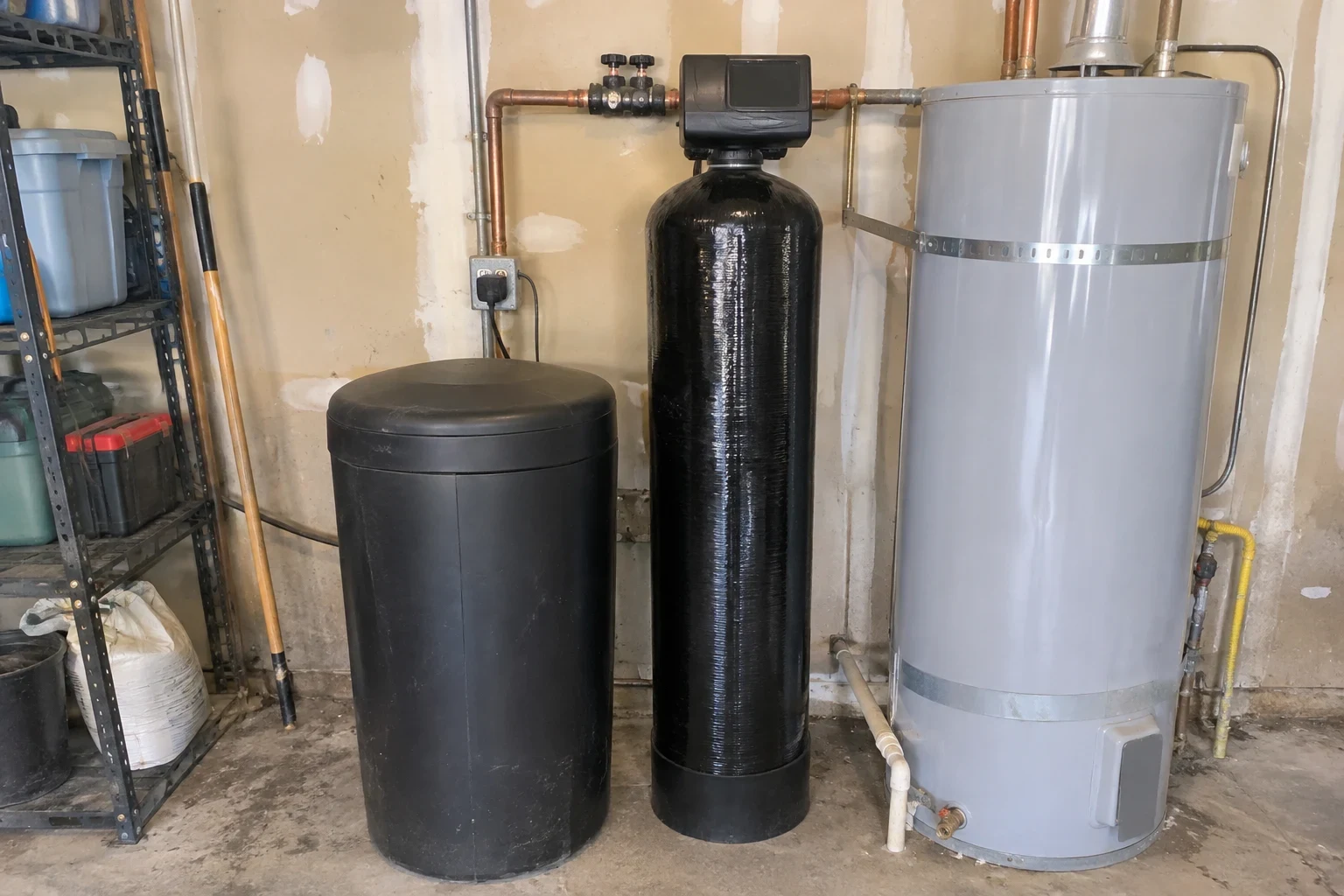
A traditional softener uses ion exchange. Water passes through a tank of resin beads that trade calcium and magnesium for sodium or potassium. Every so often the system regenerates. It flushes the resin with brine from a salt tank and sends the rinse water to a drain. The result is truly soft water: soap lathers easily, glass shower doors stay clearer and water heaters collect far less scale.
A salt-free conditioner works differently. Most use a media that changes hardness minerals into tiny crystals that stay suspended in the water instead of bonding to pipes and heating elements. Nothing is removed, so the water will not have that slick feel after a shower, and you may still see some spotting on fixtures. In exchange there is no salt to carry, no brine discharge, and usually no drain line or electrical outlet needed.
Neither one is better in every house. A softener solves hardness completely. A conditioner protects plumbing with very little ongoing work.
How do you know which one your home needs?
Start with numbers, not a sales pitch. Hardness is measured in grains per gallon, and it varies more around Central Texas than most people expect, even between nearby streets on different supply lines. We test the water at your tap and walk you through the results before we suggest any equipment.
Hardness is only part of the picture. Iron, chlorine and pH all change what will work well, and some of them call for a different kind of treatment entirely.
- Moderate hardness with scale on faucets and showerheads often points to a salt-free conditioner.
- High hardness, dry skin and soap that will not rinse away usually point to a salt-based softener.
- Noticeable iron or orange staining may need iron removal ahead of any softener so the resin does not foul.
- A chlorine taste or smell is a filtration question, not a hardness question, and whole-home filtration handles it better.
What features and sizing actually matter?
For a salt-based softener, capacity matters most. It is rated in grains, and we size it from your hardness reading and the number of people in your home so it regenerates every several days rather than every night. An undersized tank wastes salt and water. An oversized one can let the resin sit too long between cycles.
Look closely at the control valve. A metered valve regenerates based on the water you actually use rather than a fixed calendar, which saves salt when the house is quiet. A bypass valve lets you shut the system out of the loop for service without turning off water to the house. Tank construction and resin quality show up years later, in how well the unit holds its capacity.
For a salt-free conditioner, the flow rating needs to match your plumbing. If several showers and the washer run at once, a unit rated too low will drop your water pressure. A sediment prefilter in front of it protects the media and is easy to change.
What does owning one look like after installation?
This is where many people get surprised, so we explain it before the job and again after. A salt-based softener needs salt topped up, usually every month or two. Salt can harden into a crust called a bridge that sits above the water and stops brine from forming. Pushing a broom handle down through the salt now and then breaks it up. Over the years the resin may benefit from a cleaning, especially if there is any iron in the water.
A salt-free conditioner asks less of you. The prefilter cartridge gets changed on a regular schedule, and the conditioning media is replaced after several years depending on water use. There is no salt bin to watch.
Once your system is in, we check back to make sure it is performing as expected. We test the treated water and show you the routine care so you are not guessing later. If the hardness reading has drifted or something feels off, that follow-up is when we catch it.
When is a softener not the answer?
If your water tests soft or only slightly hard, a softener adds cost and upkeep without much benefit, and we will tell you so. Many households are really bothered by taste, odor or what might be in their drinking water. A whole-home carbon filter or a reverse osmosis system at the kitchen sink addresses those concerns directly. Sometimes the best plan pairs a modest conditioner with one of those, rather than a large softener alone.
Common questions about choosing a softener
Something not covered here? (512) 883-7067
Is softened water safe to drink?
Salt-based softening adds a small amount of sodium to the water. Many families add a reverse osmosis faucet at the kitchen sink for drinking and cooking, or choose potassium chloride instead of salt.
Will a salt-free conditioner make my water feel soft?
Not really. It reduces scale buildup, but the minerals stay in the water, so it will feel much the same as it does now in the shower.
Does installation cost extra?
We offer free installation. Your quote covers the equipment we recommend after testing, and we go over every line with you by phone or at your home.
Can I switch from a softener to a conditioner later?
Yes. Both connect at the main water line, so swapping one for the other is straightforward if your needs or preferences change.
Find out what your water actually needs
One call gets you a free water test at your tap and a clear quote for the system that fits your home, along with how to care for it afterward.