ServicesWater Testing & Analysis
Water Testing & Analysis in Wyldwood
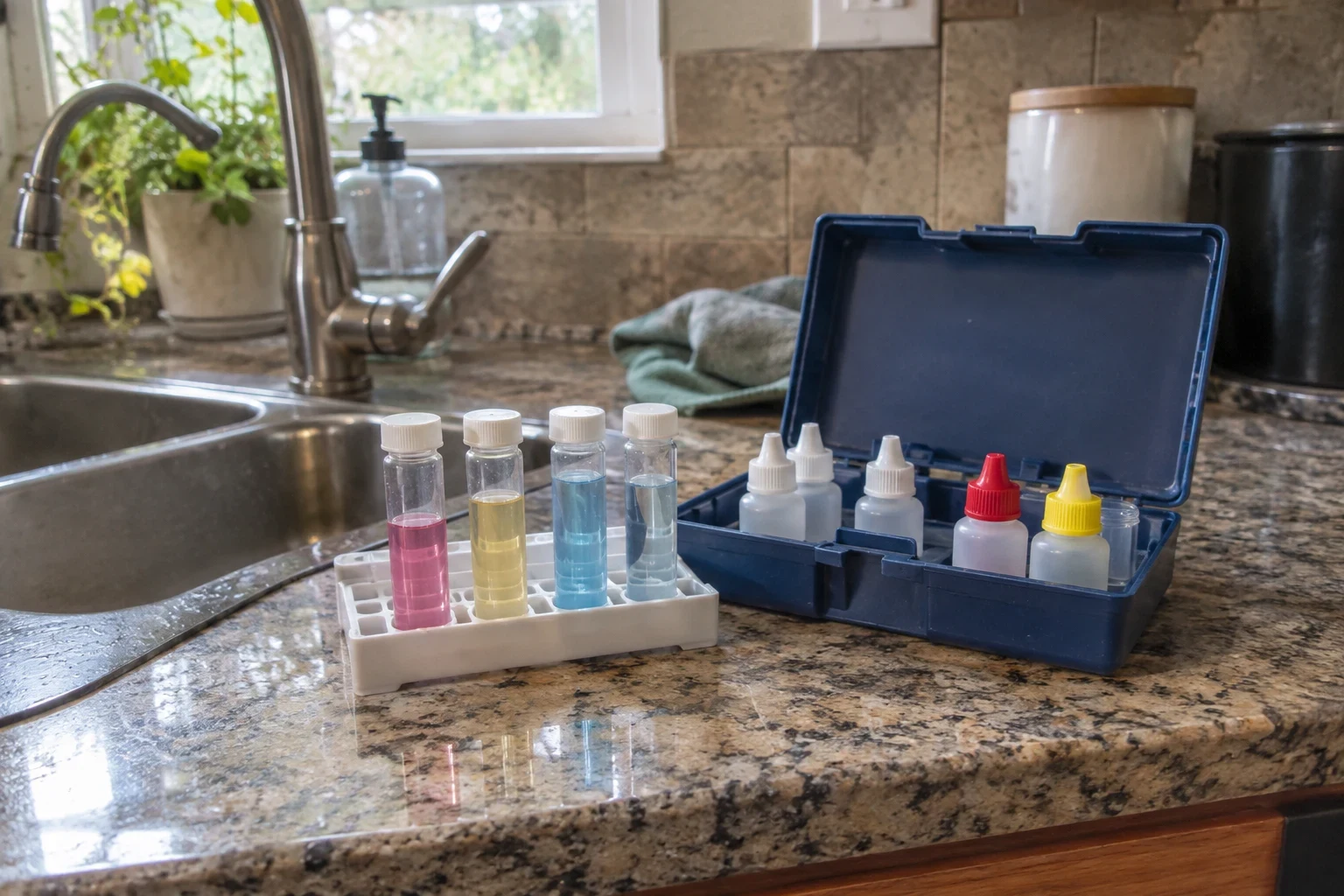
We test the water at your kitchen tap, explain each reading in plain terms and tell you honestly whether you need treatment at all. If a system makes sense later, we come back once it is installed and test again so you can see the difference.
Know what is in your water before you buy anything
Most filtration mistakes start with a guess. A softener goes in where the real issue was chlorine taste, or a carbon filter goes in where iron was staining the tub. A proper test removes the guesswork and points to the one or two things worth fixing, if any.
Our water testing and analysis covers the measurements that drive real decisions in your home: hardness, iron, sulfur, chlorine, pH and dissolved solids. When a question calls for more precision, such as lead from older plumbing or bacteria, we can arrange an independent lab panel and walk you through the report when it comes back.
Testing is also how we close out every job. Once any system is installed, we return to test the same tap again, show you the before and current numbers side by side and explain how to care for the equipment so the results hold.
What a test from us covers
Hardness and mineral load
We read hardness in grains per gallon alongside the overall mineral content, often called TDS. Those two readings tell us whether a water softener, a salt-free water conditioner or neither deserves a place in your home.
Iron, manganese and sulfur
Rust-colored stains, black specks and a rotten-egg smell each trace back to something measurable. We check for them so iron and sulfur removal is only suggested when the readings support it.
Chlorine and pH
Chlorine explains most taste and odor complaints on utility water. pH tells us how the water treats your pipes and fixtures, and it affects which filter media will perform well.
Lab panels when precision matters
Lead, bacteria and certain trace contaminants need an independent laboratory rather than a field kit. We help collect the sample correctly and go over the lab's report with you line by line.
Written results you keep
You get the readings in writing, with a short note beside each one saying what it means and whether it needs attention.
A retest once a system is running
If you go on to add filtration, we test the same tap again once the equipment is in service. You see the change for yourself, not just a promise of it.
Signs it is time to test your water
White crust on fixtures and shower doors
That buildup is mineral scale. Before picking a softener or a conditioner, it helps to know exactly how hard your water is.
Rusty, brown or dark stains
Marks in sinks, toilets and clothes typically point to iron or manganese. How much is present determines which treatment will do the job.
Water that smells of chlorine or sulfur
Chlorine is normal in treated city water and simple to filter out. A rotten-egg odor is a separate issue with its own solution, so it pays to find out which one you have.
Old pipes or a baby on the way
Aging pipes and solder can put lead into tap water even when the utility's supply is clean. Only a lab test can tell you for sure.
A new house
Moving in means inheriting plumbing and fixtures with an unknown history. A first test sets a clear baseline.
How a testing visit runs
- 1
A phone conversation first
We start by hearing what has caught your attention, whether stains, an odd taste or a smell, and agree on a visit time. What you describe guides the tests we bring.
- 2
Sampling at your tap
We draw water from the kitchen tap and, where it helps, a second point such as an outdoor spigot ahead of any existing filter. Field readings are taken right there, and lab samples are sealed and labeled.
- 3
Results at your table
We sit down with you and go through each reading. If your water is in good shape, we say so. If something needs attention, we explain the options plainly and leave the decision with you.
- 4
Checking back on the work
If you choose a system, we come back once it is installed, test again and show you the comparison. We also explain filter changes and simple upkeep so the water stays the way the test shows it.
What affects the cost of testing
The in-home test at your tap is free. Costs only come into it when a question needs a laboratory, and we explain that before any sample is sent. You will know what each lab panel covers and why we suggest it before you agree to anything.
- Which lab panels you need
- Lead, bacteria and broad contaminant screens are each separate panels. We suggest only the ones your concerns and readings point to.
- How many sample points
- Testing one tap is simple. Comparing water before and beyond an existing filter, or at two locations, adds samples.
- Follow-up lab testing
- The retest on a newly installed system is part of our follow-up. A lab confirmation at that stage is optional and discussed in advance.
Water testing questions
Something not covered here? (512) 883-7067
Will you try to sell me a system after the test?
No. We show you the numbers and tell you what they mean. Plenty of homes need nothing at all, or only a simple drinking water filter, and we say so when that is the case.
My water comes from a utility. Is testing still worth it?
Utility water is treated and monitored, but that testing stops at the main. What reaches your glass also depends on your pipes, fixtures and any older solder. A test at your tap shows what is actually in your home.
Can an in-home test detect lead?
Field kits are not precise enough for lead. We collect a sample for an independent lab and go over the report with you when it arrives, including what to do if lead shows up.
What happens if the test shows I need filtration?
We explain which system fits the readings, whether that is whole-home filtration, a reverse osmosis system or iron and sulfur removal, and you can get your quote by phone. Installation is free, and we retest once the system is running.
How often should I test again?
A yearly check is sensible, and sooner if the taste, smell or color of your water changes. Once a system is in, our follow-up test confirms it is doing its job.
Start with the numbers
A free test at your tap tells you what your home's water needs, and what it doesn't. Give us a call and we will set a time that suits you.