ServicesWhole-Home Filtration
Whole-Home Filtration in Wyldwood
Our whole-home systems treat water right at the main line, so every shower, sink and the refrigerator draw from one clean supply. We choose the media after testing your water, then return a few weeks after installation to check our work and go over its care.
One system that covers every tap in the house
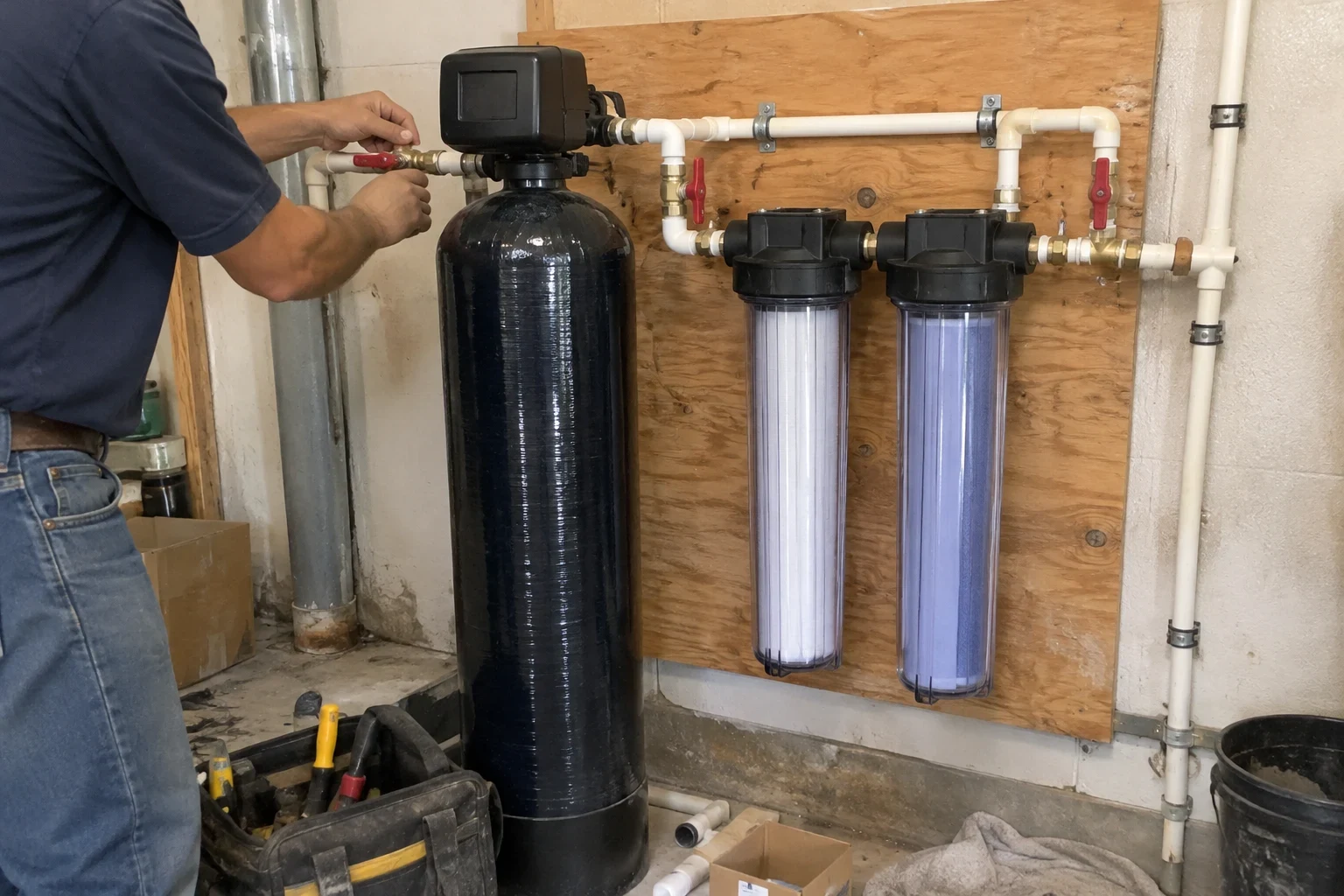
Whole-home filtration is point-of-entry treatment. The equipment mounts on the main supply line before it branches, often in a garage, a utility room or on a sheltered exterior wall, so everything downstream is already filtered. On city water, its main work is removing the chlorine or chloramine added for disinfection, plus the fine sediment that clogs aerators and showerheads.
It makes sense when an off taste or smell follows you from the kitchen to the bathroom, or when you are done changing pitcher and faucet cartridges. A filter does not soften water. If testing turns up meaningful hardness or iron, we will tell you, and we will steer you toward salt-free water conditioners, water softener installation or iron and sulfur removal rather than sell you the wrong equipment.
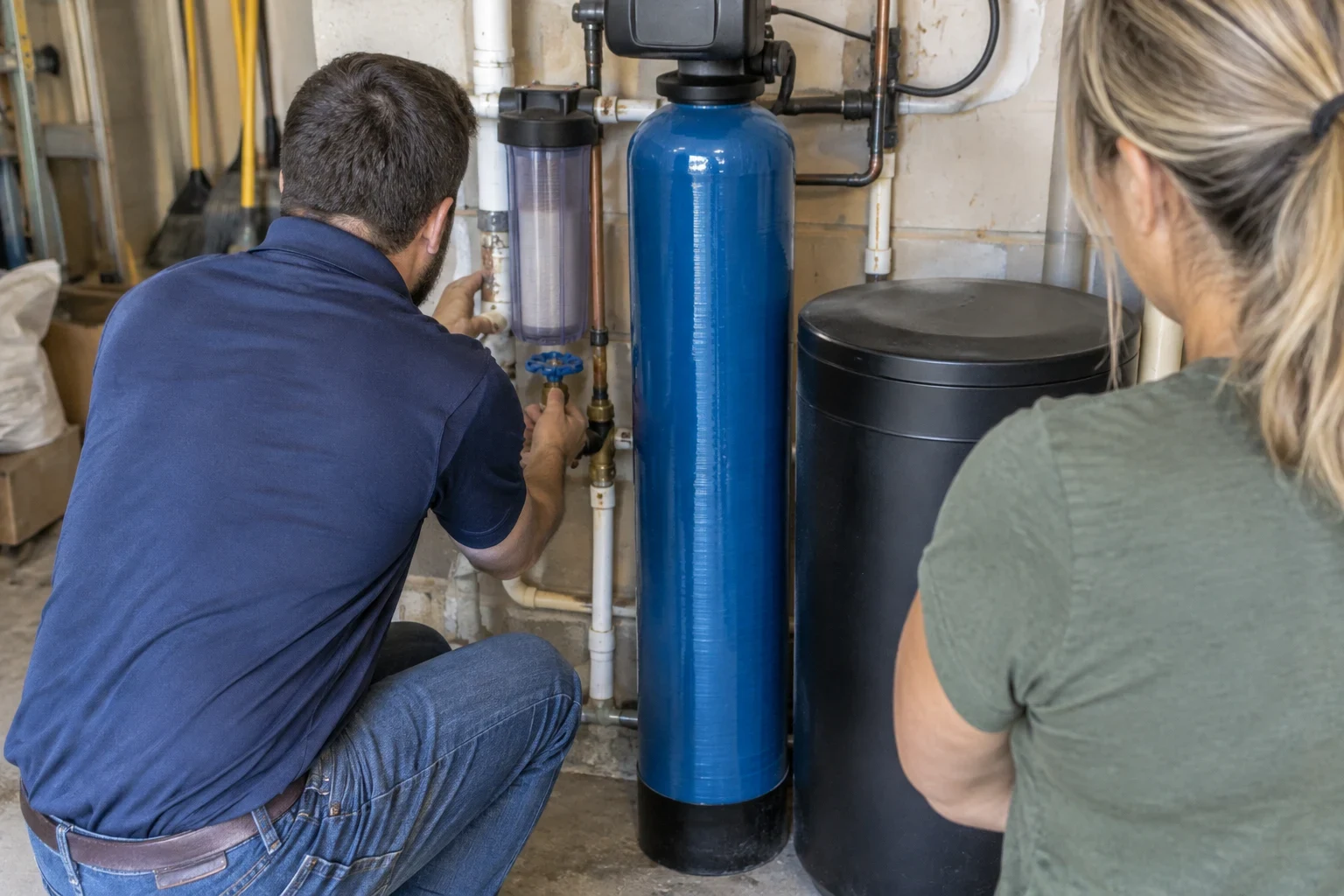
What sets our work apart happens later. A few weeks after the install we return to measure pressure, look for any seeping fittings, and show you how the bypass works and when each filter is due.
What comes with your installation
- Testing comes first
- Before we suggest anything, we check chlorine, hardness, iron, pH and total dissolved solids. Those numbers set the media and tank size, and the results are yours to keep.
- A sediment prefilter
- This cartridge sits upstream of the main tank and traps grit and loose scale. Keeping that debris out lets the carbon do its job longer.
- The right carbon for your supply
- Activated carbon is the standard choice for chlorine. Where chloramine shows up, we use catalytic carbon, which is designed to break it apart.
- Bypass and labeled shutoffs
- A bypass lets you take the system offline for a cartridge change or a garden hose while the rest of the house keeps its water. We tag every valve so it is clear which does what.
- Careful workmanship and cleanup
- We run pipe straight and support it properly, use fittings that suit the material already in your walls, and leave the space swept and wiped down.
- A return visit
- Once you have used the system for a few weeks, we come back to read the pressure, inspect each joint and take any questions you have gathered in the meantime.
Signs whole-home filtration fits your home
The shower smells like a pool
Warm water lets chlorine escape as vapor, which is why many people first notice it in a steamy bathroom. A filter on the kitchen counter cannot reach that.
Coffee and ice have an aftertaste
Disinfectant flavor shows up in brewed drinks and frozen cubes. Treating the main line cleans up the refrigerator supply along with everything else.
Aerators keep clogging with grit
Rinsing sandy specks out of faucet screens means sediment is getting through, and it wears down valve cartridges over time.
Too many filters to keep track of
Pitchers and tap filters scattered through the house cost money and attention. A single system on a single schedule is easier to live with.
You want to know what you are drinking
That is a good reason to begin with water testing and analysis. We will give you a straight answer on whether a whole-home filter is worthwhile.
What to expect, from first call to follow-up
- 1
A call, then a free test
Reach us by phone and we will pick a time that suits you. We test the water at your home in a brief visit, at no charge.
- 2
Your results in writing
We go through what the numbers show, which system matches your household's demand and the reasons behind it. If filtration is the wrong fix, we say so.
- 3
The day of installation
We cover the floor, close the main, open the line and mount the prefilter, tank and bypass. Expect the water to be off for a few hours; we let you know before it goes off.
- 4
Flushing and testing the work
The new media is flushed or backwashed, pressure is restored, and we check each joint and open every faucet so your first glass runs clear.
- 5
Our check-back
A few weeks on, we return to look the system over and leave a plain care sheet that covers cartridge changes and when the media will need replacing.
What moves the cost of a whole-home system
Because we offer free installation, the number on your quote comes down mainly to the equipment your water and your house call for. Every component gets its own line on the written estimate. What you agree to is what you pay.
- How many people and bathrooms
- A bigger household pulls more water at the same moment. We size the tank up so a running shower and a washing machine do not leave anyone with a weak trickle.
- Standard or catalytic carbon
- Catalytic carbon, which is built to break down chloramine, is the more expensive media. We only specify it when your test shows chloramine is present.
- Access to the main line
- When the supply line enters within easy reach, say on an open garage wall, the work stays straightforward. Rerouting or extending that line calls for more pipe, more fittings and more hours on site.
- Optional extra stages
- Some owners add reverse osmosis systems under the kitchen sink or UV water purification. We bring these up only when your results point to a real need.
Whole-home filtration questions we hear often
Something not covered here? (512) 883-7067
Will I lose water pressure after it goes in?
Not in a way you should notice, as long as the system matches your flow. Pressure drops tend to come from an undersized tank or a prefilter left too long. We size the tank to your busiest hour and measure pressure again when we come back.
Will this take care of hard water too?
It will not. Carbon removes chlorine, sediment and the tastes and smells that come with them, but calcium and magnesium pass through. If your test shows hardness worth treating, we will go over salt-free water conditioners and water softener installation with you.
What upkeep does the system need?
The sediment cartridge is the piece you will change most, typically a few times a year, and more often when the supply runs gritty. The carbon bed lasts years before it is due for replacement. Your care sheet spells out the timing, and we show you how to change the cartridge yourself.
Should I keep a separate filter for drinking water?
For taste alone, most owners find the whole-home system covers it. If you want lower dissolved solids, or you have older plumbing that worries you, an under-sink reverse osmosis unit gives drinking and cooking water an added layer.
Where does the equipment get mounted?
We place it at the point the main line comes into your home, commonly the garage or a sheltered exterior wall. We choose a spot with clearance for cartridge changes and walk you through the layout before any pipe is cut.
Start with a test of your own water
We will check your water, tell you honestly whether whole-home filtration fits, and give you a clear quote. Serving Wyldwood, Bastrop, Cedar Creek and nearby.