ServicesWell Water Filtration
Well Water Filtration and Treatment in Wyldwood
Every private well behaves differently. We test your water first, then build a filtration setup around what is actually in it: sediment, hardness, iron, odor or bacteria. Once the system is in, we come back to check it and walk you through its care.
Filtration chosen from your well, not from a catalog
Well water reaches your faucets exactly as it leaves the ground, with no plant cleaning it along the way. Its character depends on the depth of the well, the rock it draws from, the age of the pump and pressure tank, and even the season. Two homes a mile apart can need very different equipment.
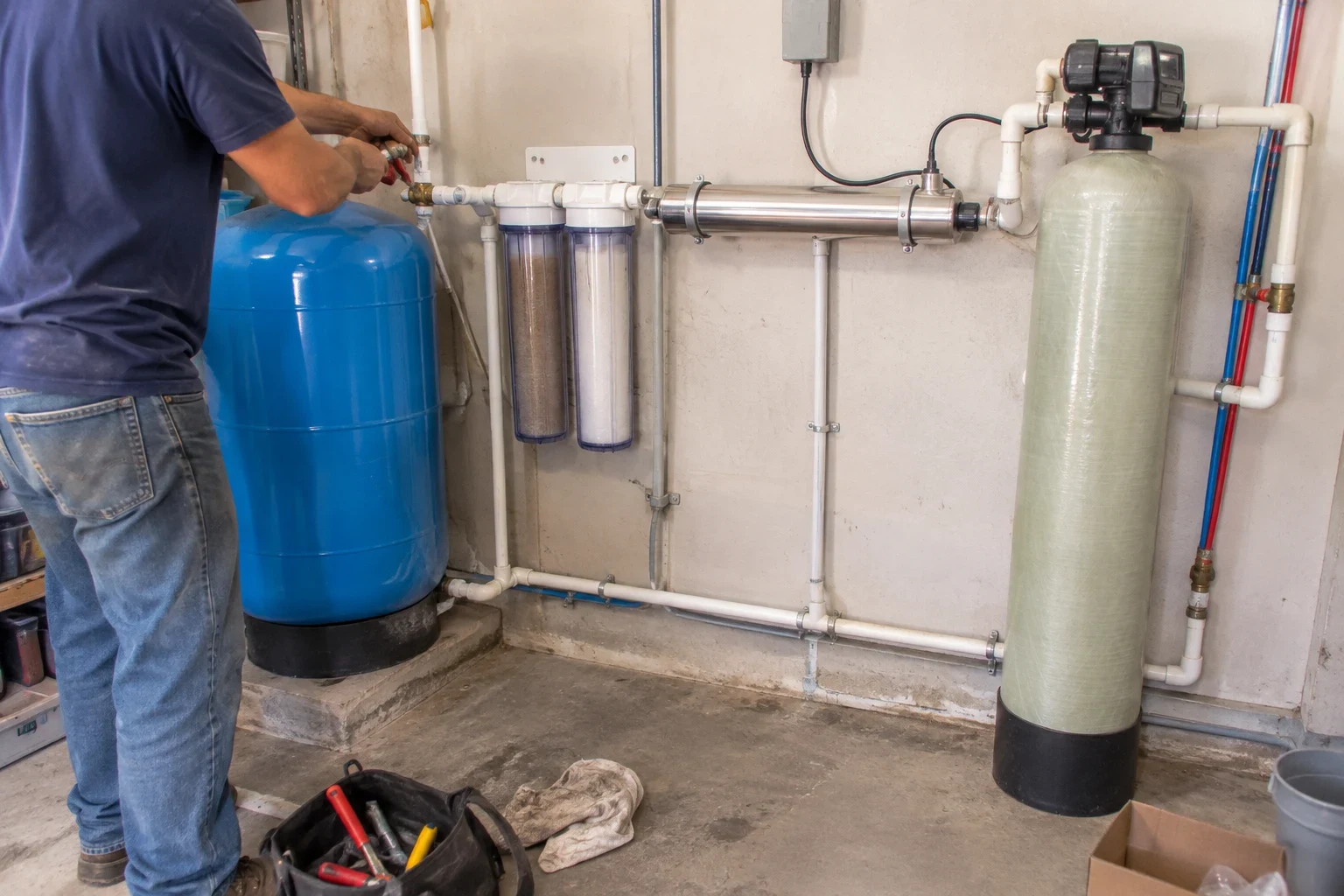
So we begin with a water test and recommend only what the results support. For some homes that is a single sediment filter. Others need a staged system with a sediment prefilter, a carbon or specialty media tank and a UV lamp at the end. We explain each stage and what it is there to catch.
Installation is free. What we care about just as much is the return visit once the system has run for a few weeks, when we check pressure, look at the first filter and show you the simple routine that keeps it working.
What a well filtration job includes
- A test before any recommendation
- We check hardness, iron, pH, sediment and odor, and we can arrange lab testing for bacteria. You see the numbers and what each one means for your fixtures and your drinking water.
- Sediment prefiltration
- Sand and grit from a well wear out valves, cartridges and faucet aerators. A prefilter ahead of everything else protects the rest of the system and your plumbing.
- Media sized to your flow
- Tanks are sized to your household's peak use so pressure holds when the shower and washer run together. An undersized tank lets water pass through before it is fully treated.
- Targeted stages where needed
- If the test shows iron, a rotten-egg smell or bacteria, we add the matching stage. We also offer iron and sulfur removal and UV water purification as their own services when those are the main concern.
- A tidy installation
- We lay down drop cloths, keep fittings neat and labeled, and add bypass valves so the system can be serviced without shutting off your water for long.
- The follow-up visit
- We return once the system has settled in, retest if needed and leave you a written care schedule for filters, lamps and media.
Signs your well water needs filtration
Grit in aerators or toilet tanks
Fine sand collecting in faucet screens points to sediment coming up from the well. It shortens the life of appliances and cartridges alike.
Orange or brown stains
Rust-colored rings in sinks, tubs and laundry usually mean dissolved iron. It tends to get worse as fixtures age.
A sulfur or musty smell
A rotten-egg odor, often strongest from hot water, comes from hydrogen sulfide or bacteria in the well or water heater.
Cloudy or off-tasting water
Cloudiness after heavy rain or a metallic taste can mean surface water or minerals are reaching the well.
No test in the last year
Well water can change over time without any visible sign. A regular test is the simplest way to know where you stand.
How the work goes, start to finish
- 1
Test and talk it through
We test your water at your home and explain the results in plain terms. If something calls for a lab, we tell you why and arrange it.
- 2
A written recommendation
You get a quote that lists each stage, what it treats and what upkeep it needs. If a simpler setup will do, we say so.
- 3
Installation day
Most systems go in near the pressure tank or where the line enters your home. We protect the floor, install bypass valves, flush the new media and check for leaks before we leave.
- 4
The check-back
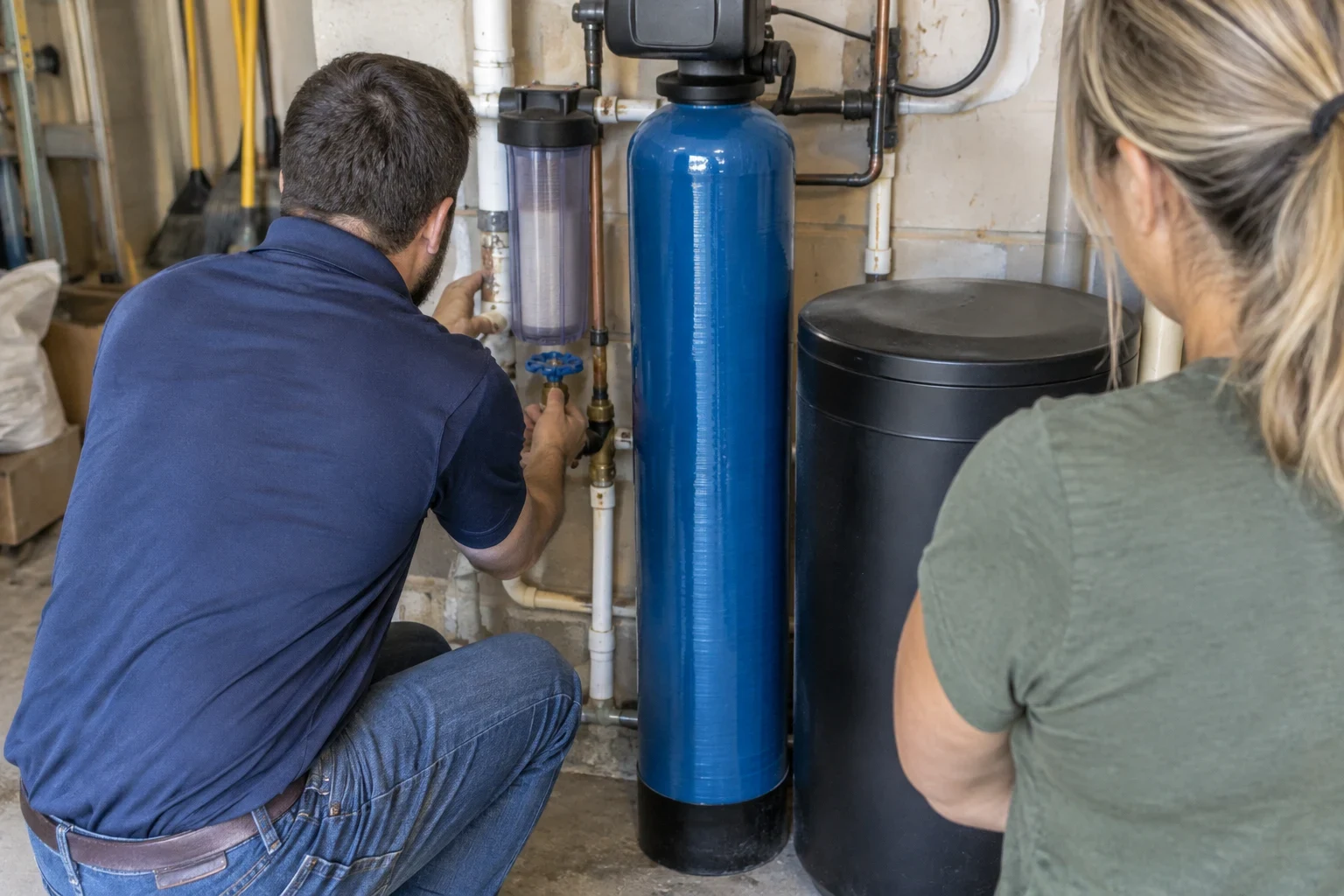
A few weeks later we return to look at pressure, inspect the first filter and confirm the water is doing what the test said it should. Then we go over the care routine with you.
What shapes the cost
Installation is free, so your quote covers the equipment your water actually needs. The price comes down to how many stages the test calls for and the size of the tanks. We put every item in writing before any work begins.
- What the test finds
- Sediment alone needs one stage. Iron, sulfur or bacteria each add equipment.
- Household flow
- More bathrooms and people mean larger tanks to keep pressure steady.
- Space and plumbing layout
- A clear spot near the pressure tank is simple. Tight utility rooms or long runs to reach the main line take more fittings and time.
- Ongoing upkeep
- Cartridges, UV lamps and media have different replacement schedules. We explain those costs up front so nothing surprises you later.
Before you filter your well: common questions
Something not covered here? (512) 883-7067
Why start with a water test instead of just picking a system?
Equipment chosen without results is a guess, and guessing tends to mean paying for stages your water never needed. The test costs you nothing. It often shows that a filter someone expected to buy is not necessary at all.
Will filtration make my water pressure drop?
A system sized to your household should leave pressure close to what you have now. When pressure does sag, the usual causes are a tank too small for your peak use or a prefilter clogged with sediment. Checking pressure is part of our follow-up visit for exactly that reason.
How often will I change filters on a well system?
Wells tend to send more sediment than city lines, so sediment cartridges can need replacing every few months. Media tanks and UV lamps last longer between changes. We leave you a written schedule that matches the equipment in your home.
Can I drink the water once the system is in?
The system treats what your test found. When bacteria is a concern, a UV stage takes care of it, and we suggest a retest after the system is running so you are working from fresh results rather than assumptions.
What happens once installation is finished?
After the system has run for a few weeks, we return to check pressure, inspect the first filter and confirm the water matches what the test predicted. If questions about care come up before or after that visit, give us a call.
Find out what is in your well
A free water test tells us what your well needs and what it does not. From there we can give you a clear written quote, with installation included at no charge.