ServicesWater Softener Installation
Water Softener Installation in Wyldwood
We test your water first, size a softener to the hardness we actually find, and install it at your home's main line with care for your plumbing and floors. A few weeks later we check back to confirm it is regenerating properly.
A softener that fits your water, not a sales sheet
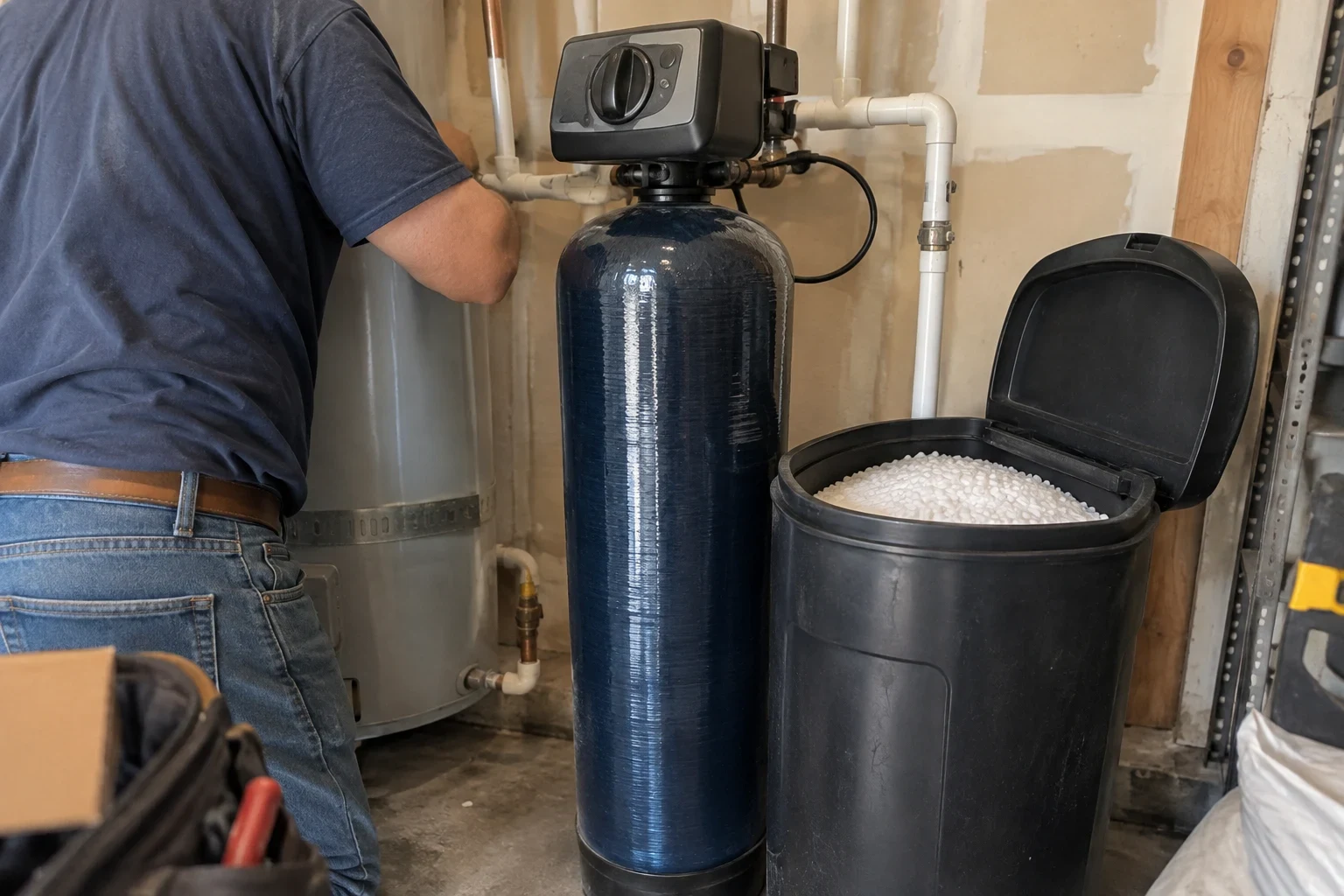
A water softener removes calcium and magnesium, the two minerals that leave chalky rings on taps, a dull haze on drinking glasses and a hard crust inside a water heater. It works by ion exchange. Inside the main tank sits a bed of small resin beads that hold onto the hardness minerals and release sodium or potassium in their place, and a separate brine tank refreshes that resin bed on a regular schedule.
It makes sense when a test confirms real hardness and you are living with the effects. It is not the answer for every home. If your water reads only mildly hard, a salt-free water conditioner or whole-home filtration may serve you better, and we will say so plainly.
For us, the job is not over the moment the bypass valve opens. Once the system has cycled a few times, we come back to retest the softened water and walk you through the handful of easy habits that keep the resin performing for years.
What the installation includes
- Hardness test before sizing
- We measure hardness and check for iron at your tap. Those readings, along with how many people live in your home, set the resin capacity and the regeneration schedule.
- Resin and brine tank placement
- The tanks go in a garage, utility room or wherever your main line allows, on level ground with easy reach for adding salt. We lay down floor protection before any tools come out.
- Bypass valve and plumbing connections
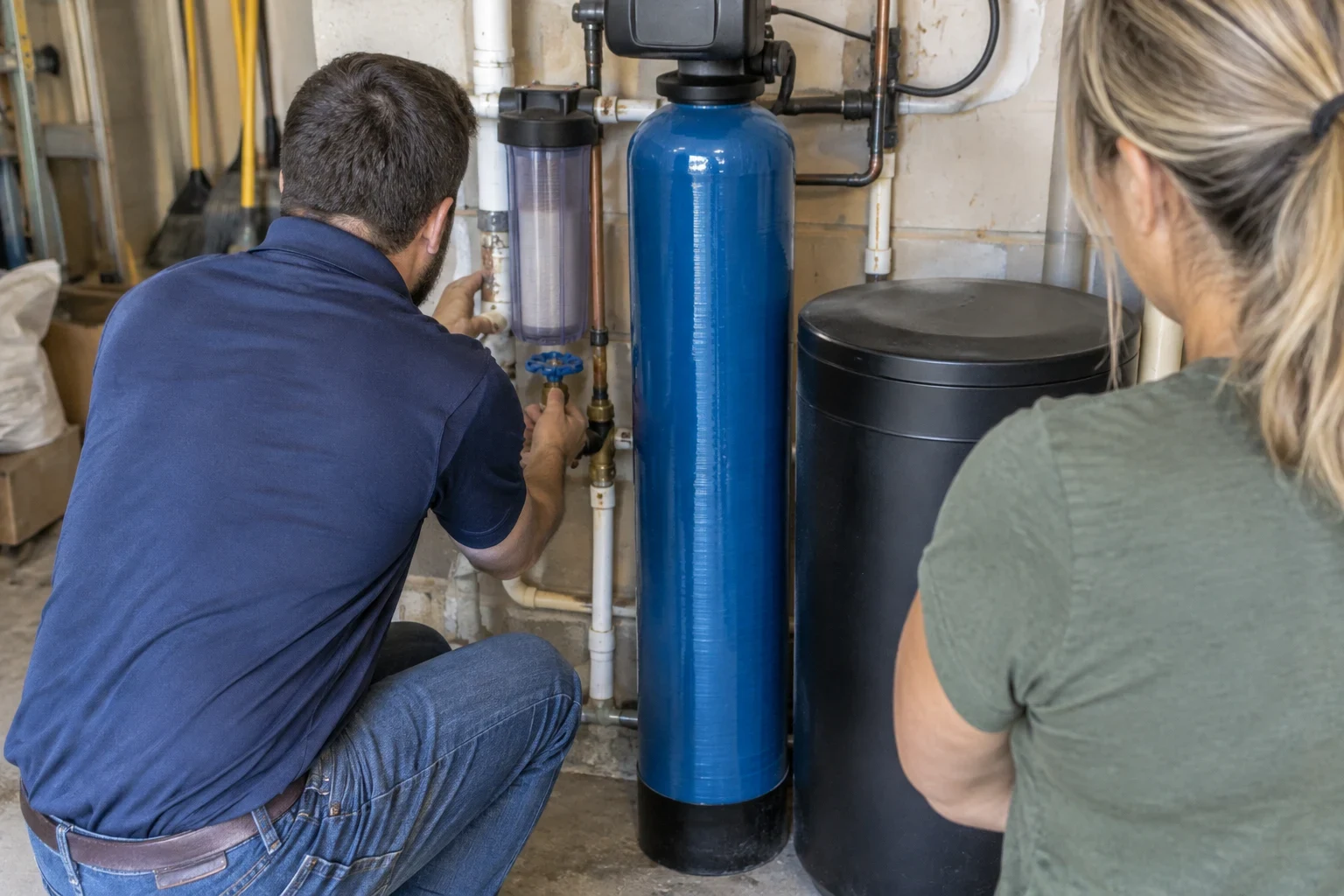
- A bypass valve lets you take the softener out of the line while the rest of the house keeps its water. We make the connections neatly so the finished work is tidy and simple to service later.
- Drain line with a proper air gap
- Backwash water runs to a suitable outlet through an open air gap. That physical break keeps used water from ever being drawn back toward the softener.
- Control valve programming
- We program a metered valve to regenerate when your actual usage calls for it, not on a fixed calendar. Quieter weeks then use less salt and water.
When hard water is showing up around your home
Chalky rings on taps
A pale, gritty layer reappears on faucets, shower heads and glass doors only days after a good scrub.
Hazy glassware
Rinse aid or not, glasses come out of the dishwasher with a cloudy film you can see against the light.
Soap that barely foams
You use more shampoo and dish soap than seems right, and a tacky residue lingers on skin and the tub.
Noisy water heater
Mineral scale settled at the bottom of the tank crackles as it heats and slowly costs efficiency. Tankless units may throw scale-related error codes.
Rough, gray laundry
Towels dry stiff and whites fade because minerals tie up detergent during the wash.
How the work runs
- 1
A phone call and a free water test
Tell us by phone what has been bothering you about your water, and we arrange a free water test at your home. The readings show whether a softener deserves a place in the conversation at all.
- 2
A clear recommendation
We go through the hardness reading, the size we would suggest and the reasoning behind it. If another approach suits your home better, that is what you hear first.
- 3
Installation day
We shut the water off briefly, fit the bypass, set both tanks, run the drain line and pour in the first load of salt. The work area is cleaned before we leave.
- 4
Startup and walkthrough
We run a regeneration cycle and test the softened water while you watch. Then we show you where the bypass is, how to judge the salt level and what the display on the valve means.
- 5
We check back
After a few weeks of normal use, we return to retest hardness, confirm the settings match how your household actually draws water, and answer anything that has come up since.
How the softener price comes together
Our installation is free, so the figure you hear is mostly the equipment. Which equipment that is depends on what the test shows and how your home uses water. We give you the complete number by phone once the results are in, before anything goes on the calendar.
- Hardness and household size
- More minerals per gallon and more people drawing water both raise the grain capacity you need. That points to a bigger resin tank.
- Iron in the water
- A little iron can be handled by the right resin. When the level runs higher, a separate iron and sulfur removal stage ahead of the softener protects the resin.
- Valve type
- A metered, demand-based valve costs more at the start than a simple timer valve. Over the years it uses noticeably less salt and water.
- Added filtration
- Some homeowners add a carbon stage for chlorine taste, or reverse osmosis systems at the kitchen sink. That adds equipment, but it can usually go in during the same visit.
Questions about water softeners
Something not covered here? (512) 883-7067
Do I need a softener or a salt-free conditioner?
Your test results and your goals decide it. A softener pulls the hardness minerals out, which ends spotting and soap film. A salt-free water conditioner alters how those minerals behave so less sticks to pipes and heaters, though some spotting can remain. We lay both options next to your numbers so you can compare.
How often will I add salt?
It varies with how hard your water is, how much your household uses and where the valve is set. Many homes end up glancing into the brine tank every few weeks and refilling once the salt sits below the halfway mark. When we check back, we confirm the routine that suits your home.
Will softened water taste salty?
Most people cannot taste it. Softened water does carry a small amount of sodium, so some homeowners choose a reverse osmosis system for drinking and cooking, or use potassium instead of salt.
How do I care for the system once it is running?
Keep clean pellet salt in the brine tank, break up any hard crust that forms across the top, and leave the valve settings as they are unless your household changes. We leave written care notes and review them with you on the follow-up visit.
Will installation disrupt my day?
Your water is off only for the short time we spend cutting into the main line. Everything else happens at the tanks and drain, and the area is cleaned before we go.
Find out if a softener is right for your home
Start with a free water test and a clear quote. If a softener fits, we install it, then come back to make sure it is doing its job.